Alberto González

Open to freelance work

Portrait of Alberto González

Hello, I’m

Alberto González

Product designer & founder

I direct a team of AI agents from the first spec to a verified release. 8+ years in UX/UI and design systems for fintech and ecommerce.

Chile, UTC-3 · Spanish native

  • 8+Years in product design
  • 4Products designed and built
  • 6Agent roles, one board

Agentic-first, with Claude Code and MCP every day.

The Command Room

Where I direct the agents. A recreation with made-up sample data; the real board stays private.

Factory sample data updated 09:41
Release 2 · Kitchen view7 of 9

On pace: the last two cards are in independent check.

  • Cards verified 12 today 30 days: 9 a day on average
  • Returns per card 0.3 today 30 days: 0.4
  • Time to verify 38min today 30 days: 44 min

Board

  • 3 verified
  • 1 in check
  • 1 in build
  • 1 spec
  1. Order button wording verifiedDev 3
  2. Kitchen view at 360 px verifiedDev 8
  3. Menu contrast AA verifiedverif-5
  4. Empty orders state in checkverif-8
  5. Launch post draft in buildMarketing
  6. Owner weekly summary specPO

To review

0

Nothing waits for your review.

2 cards still in independent check.

What happened

24 h
  1. Cortex saved the session notes · Memory
  2. verif-8 sent one back with evidence · Returned
  3. verif-5 passed 3/3 checks · Verified
  4. Dev 8 started the build · Build
  5. PO opened a card: weekly summary · Spec
A recreation of my Command Room with made-up sample data: release progress, today’s numbers, the board with each task, its state and the agent working on it, what is waiting for my review and what happened recently.

Selected work

Spec, build, then verified by a separate agent or shipped.

  1. Spec
  2. Build
  3. Verified

The Command Room and the agent factory

ProblemOne person directing many AI agents loses track between sessions, and an agent that checks its own work is not a check.

I built a Command Room where I direct a team of AI agents. One board holds every decision with an id and the live state of each task. Every task follows a fixed path: spec, build, then an independent check by a separate agent before anything reaches me.

Each agent has a role. Cortex keeps the shared memory and coordinates, so each session knows what the last one did. The PO orders the board, the TL writes the technical plan, Devs build in their own workspace, verifiers check with evidence, and Marketing writes. There is also a voice channel, so I can direct the room without a keyboard.

role
Founder, product and system design
stack
Claude Code, MCP, Python, HTML/CSS/JS
builds
Kocino, my restaurant product
card sample data

Order button wording

spec

The main button says what happens: “Place order”, not “Submit”. It stays disabled until the order is complete.

verification, by a different agent

RequirementEvidenceResult
Label names the actionScreenshot at 390 pxpass
Disabled until completeTest with an empty cartpass
Text contrast AAMeasured 7.1:1pass
Recreated card with made-up content. The real board stays private.
  1. Spec
  2. Build
  3. Verified

Kocino, ordering and operations for restaurants

ProblemRestaurants that sell through ordering apps pay a commission on every order and follow kitchen, delivery and cash in separate places.

Web orders go directly to the restaurant. One owner panel shows live orders for kitchen and delivery, the catalog, timing analytics and the day’s cash. I defined the product and the UX; the agents built it under my review.

pilot
June 2026
launch
November 2026
stack
Python back end, own design system

See the live demokocino.cl/demo (opens in a new tab)

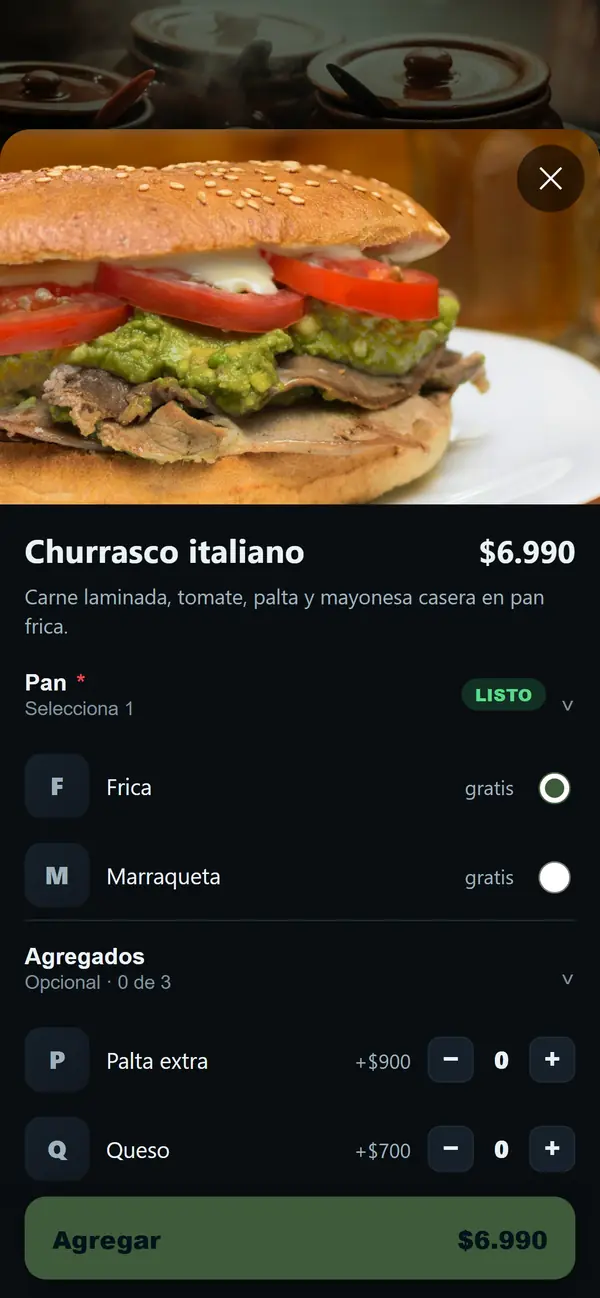
Kocino menu: a sandwich with a required bread choice marked done, optional extras with counters and an Add button with the price.
Ordering a dish with options
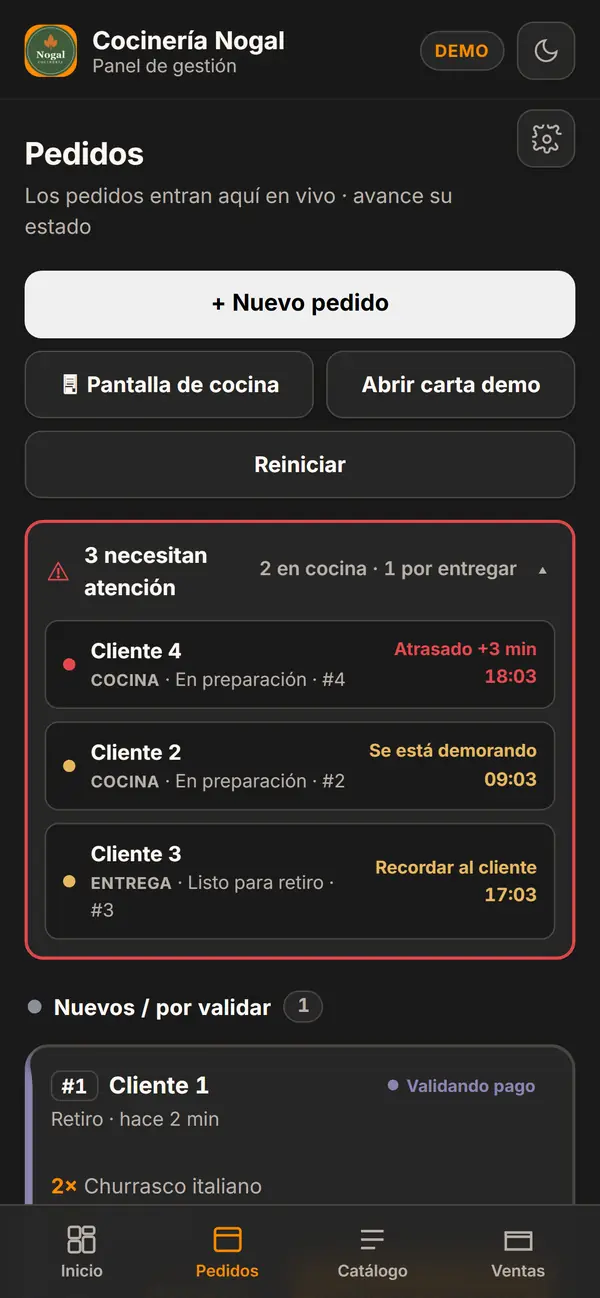
Kocino owner panel: live orders, three flagged as needing attention, with kitchen and pickup states and times.
Live orders in the owner panel

Demo store with sample data. The interface is in Spanish.

  1. Spec
  2. Build
  3. Shipped

Pulsed, a platform for training organizations

ProblemTraining organizations in Chile need to follow each student and know in time who is falling behind.

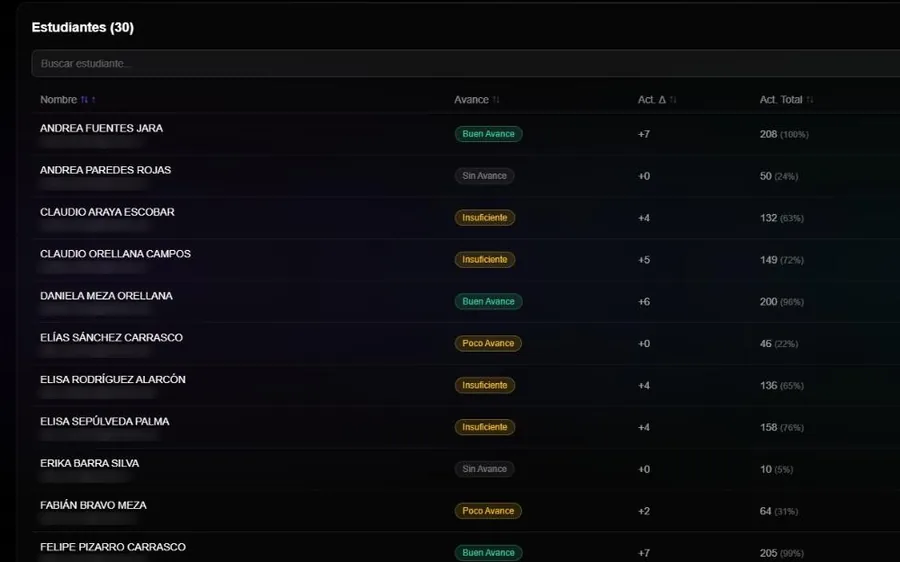
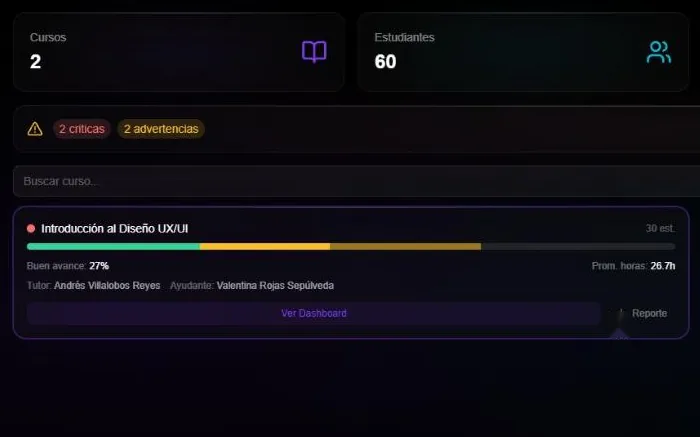
Designed end to end, with a design system from day one. The platform follows each student and shows their progress status with a traffic light (good progress, little progress, insufficient, no progress), so tutors can act in time.

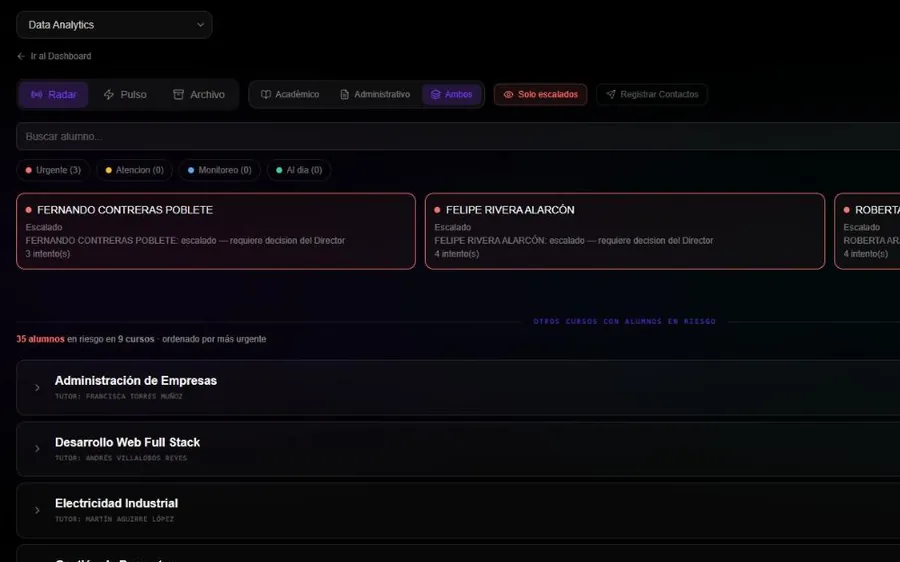
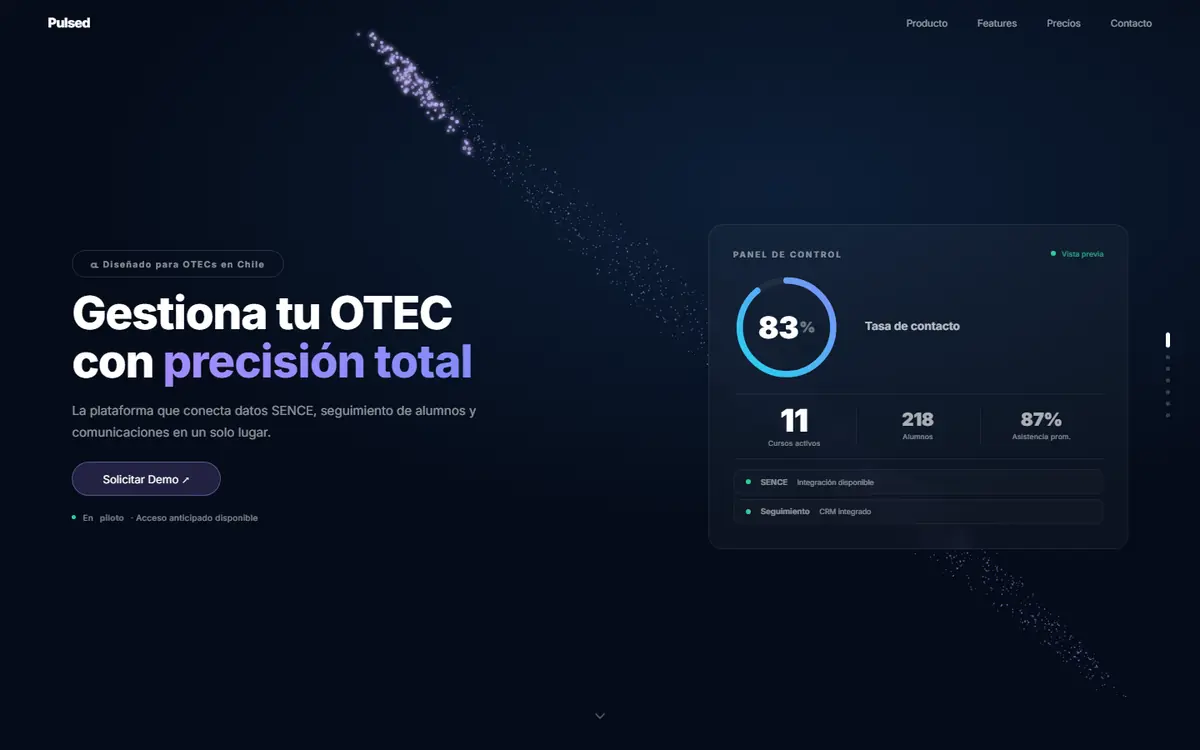
Four roles share it: admin, director, tutor and assistant. A communications radar lists the students to contact, most urgent first. The landing lives at pulsed.cl (opens in a new tab).

role
Product and UX/UI design, part of the front end
roles
admin, director, tutor, assistant
stack
React 19, Vite, Flask

Visit the sitepulsed.cl (opens in a new tab)

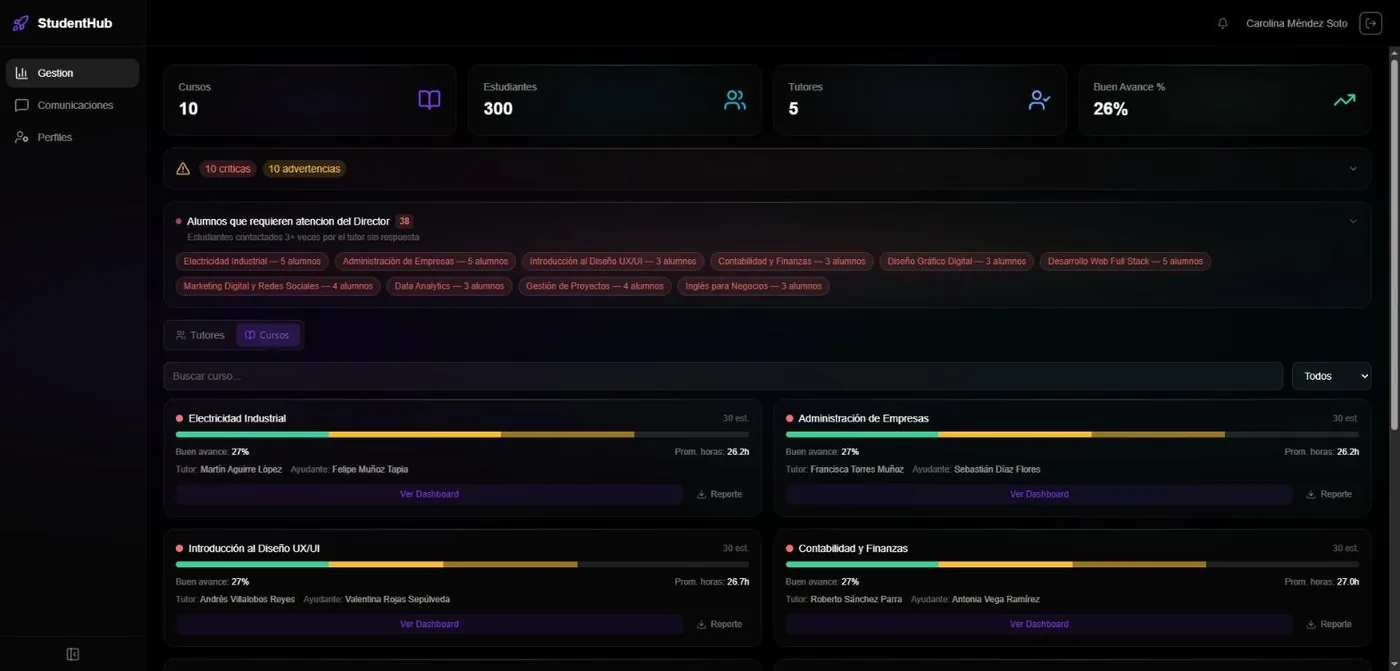
Pulsed platform, director’s management view: totals for courses, students and tutors, alerts, students that need the director’s attention, and a card per course with its progress bar.
Demo with made-up data. The interface is in Spanish; the product UI is named StudentHub.
  1. Spec
  2. Build
  3. In use

Sales Command Center, inbox triage with AI

ProblemSales email arrives mixed with everything else, and the next step gets lost.

A mobile PWA that sorts incoming email into categories with Claude and shows a pipeline view, with PIN and biometric login.

stack
React 19, TypeScript, Vite, FastAPI

Private tool: no public demo.

Inboxsample data
  • Leads 2
  • Follow-up 1
  • Other 4
  • Sample sender ACan we book a demo next week?lead
  • Sample sender BQuestion about the planslead
  • Sample sender CRe: the proposal we discussedfollow-up
Recreation with made-up email. The real inbox holds other people’s mail, so it is not shown.

More work

Earlier client and employer work, on Behance.

How I work

The same path for every task, whether a person or an agent builds it.

  1. 1

    Spec

    Each task starts as a card with the problem and its acceptance criteria. The technical plan is written before anyone builds.

  2. 2

    Build

    A developer agent builds in its own workspace, with the design system and automatic checks that run on every change.

  3. 3

    Independent verification

    A fresh agent that did not build it checks every requirement and attaches evidence. Work that fails goes back, and repeated returns escalate.

  4. 4

    Review and ship

    I review at the end of each stage. Then it goes to staging, and from there to production.

See it in motion

The same path as a short animation, with a fail, a fix and the lesson it leaves.

Reduced motion is on, so this is a still view. Press play if you want to watch it anyway.

Background

  1. 2025 to nowSENCEUX/UI and AI bootcamp instructor and mentor
  2. 2023 to 2025FalabellaProduct designer. Led a design system to unify internal tools and platforms, with reusable components, working with product managers and engineers.shipped
  3. 2023AderesoDesigner and developer. Worked on Salsa, an AI assistant
  4. 2021 to 2022BCIUI and visual designer
  5. 2020 to 2021Santander Work CaféUX/UI designer. Led the design cell
  6. 2018 to 2020LATAM AirlinesUI designer and front end, through Kiteknology. Web interfaces and animations for a multi-platform application.

Skills

AI and agents

What I do

  • Multi-agent orchestration (PO, TL, Dev, verifier)
  • Specs and acceptance criteria for agents
  • Independent verification by a second agent
  • Guardrails, sensors and mutation testing
  • Persistent memory for agents
  • Browser automation and visual QA
  • Voice interfaces (TTS and dictation)

With

  • Claude Code (skills, hooks, subagents, workflows)
  • MCP servers and connectors
  • Local models with Ollama
  • Playwright
  • Git worktrees

Design and product

  • Product Design
  • UX Design
  • UI Design
  • Design Systems
  • Prototyping
  • Figma
  • Usability Testing
  • Product Management
  • Scrum
  • Lean UX

Code

  • React
  • TypeScript
  • Python

Contact

Open to product design work with teams building with AI.